


PIC16C505-04I/P
PIC16C505-04I/P microchip DIP
8-BIT, FLASH, 20 MHz, RISC MICROCONTROLLER, PDIP14, 0.300 INCH, LEAD FREE, PLASTIC, DIP-14
Delivery
EXW
minimum order
10 pieces
Supply Ability
2200pieces / Day
Country of Origin
PHI
Stock Time
1-2Day
Quantity
PIC16C505-04I/P
8-BIT, FLASH, 20 MHz, RISC MICROCONTROLLER, PDIP14, 0.300 INCH, LEAD FREE, PLASTIC, DIP-14
8-bit static shift register programming chip power ic
Product details
This document contains device specific information for the PIC16F630/676. Additional information may be found in
the PIC® Mid-Range Reference Manual (DS33023), which may be obtained from your local Microchip Sales Representative
or downloaded from the Microchip web site. The Reference Manual should be considered a complementary
document to this DataSheet and is highly recommended reading for a better understanding of the device
architecture and operation of the peripheral modules.
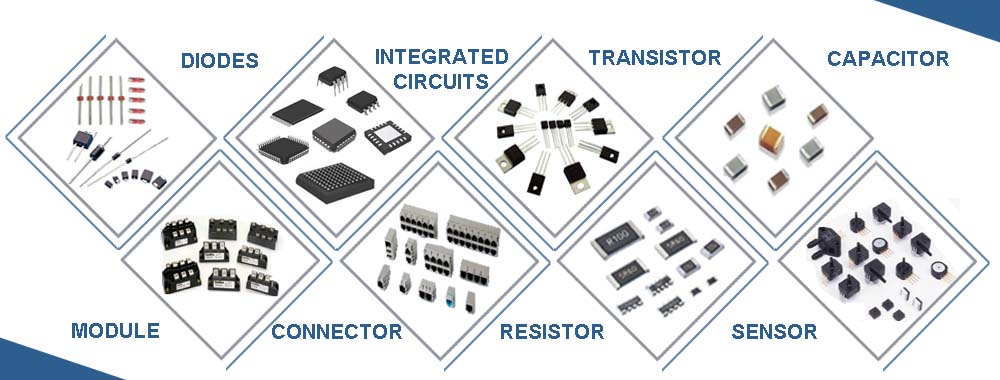
Electronic components are the basic building blocks of electronic circuits and are used to construct
various circuits that enable electronic products to perform various functions. The following are common
electronic components and their main functions:
1. Capacitor: used for storing charge, smoothing voltage, filtering, delaying, etc.
2. Resistor: used for limiting current, changing voltage, dividing voltage, regulating current, etc.
3. Diode: used for rectification, voltage stabilization, switching, etc.
4. Transistors such as thyristors and triodes: used for signal amplification, current control, switching, etc.
5. Integrated circuits (ICs): integrate multiple electronic components to achieve complex circuit functions.
6. Sensors: convert various physical quantities into electrical signals, such as temperature, humidity, light intensity, pressure, etc.
Electronic components are widely used in various electronic products such as computers, mobile phones,
1. Capacitor: used for storing charge, smoothing voltage, filtering, delaying, etc.
2. Resistor: used for limiting current, changing voltage, dividing voltage, regulating current, etc.
3. Diode: used for rectification, voltage stabilization, switching, etc.
4. Transistors such as thyristors and triodes: used for signal amplification, current control, switching, etc.
5. Integrated circuits (ICs): integrate multiple electronic components to achieve complex circuit functions.
6. Sensors: convert various physical quantities into electrical signals, such as temperature, humidity, light intensity, pressure, etc.
Electronic components are widely used in various electronic products such as computers, mobile phones,
televisions, audio, automotive electronics and more. Their function is to transmit, process and convert signals in
the circuit to provide the foundation for electronic products to perform various functions.
Sharon Business Director